

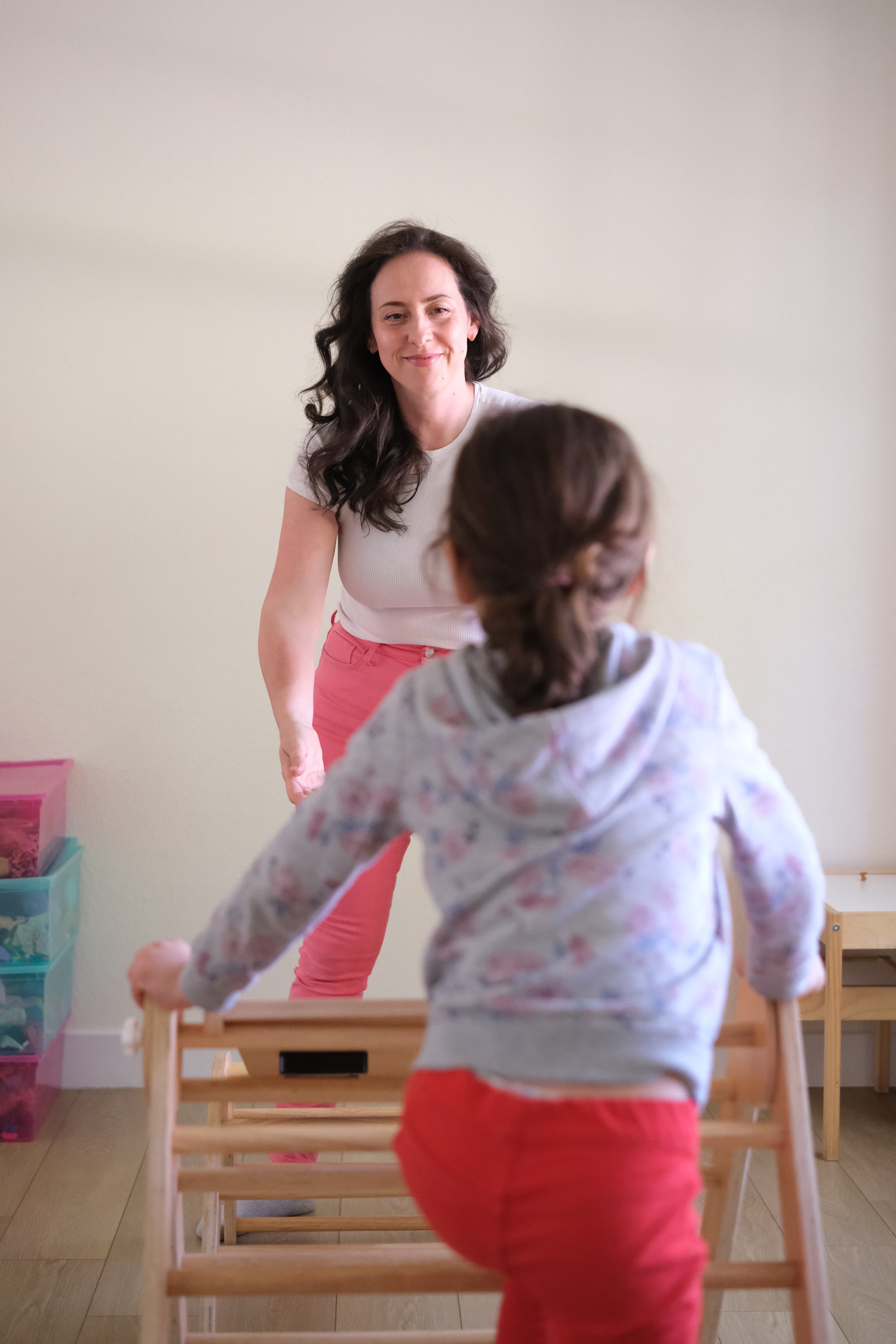
When Homeschooling Feels Harder Than It Should — There May Be a Reason
Serving homeschool families in Flower Mound, Highland Village, Lewisville, and greater Denton County, TX
When a child struggles in their homeschool journey, the first instinct is often to try a new curriculum, a different teaching style, or more patience. But sometimes, the answer isn't in the lesson plan at all.
Many children struggle not because they can't learn — but because something underneath is making learning harder than it should be. It could be a nervous system that's stuck in overdrive, a vision issue that makes reading exhausting, a language processing difference, or a developmental need that hasn't yet been identified.
When I find the root cause, everything changes. Learning becomes less of a battle. Your child becomes less frustrated. And you finally have a path forward — together.
This May Be Right for You If...
You may be in the right place if your child:
Has been evaluated by the school district but didn't qualify — yet something still feels off
Understands everything you say but struggles to express themselves clearly
Avoids reading, writing, or certain subjects and you're not sure why
Gets frustrated easily during lessons or shuts down completely
Seems bright and capable in some areas but inconsistent in others
Has trouble sitting still, staying focused, or transitioning between activities
Was told to "wait and see" but your instincts are telling you otherwise
Has a diagnosis — autism, apraxia, ADHD, sensory processing — but therapy hasn't felt quite right
Struggles with reading in a way that doesn't seem to match their intelligence
Melts down more than you'd expect for their age, especially during learning tasks
If you read that list and felt seen — you're in the right place. These are not signs that your child can't learn, or that you're not doing enough. They are signs that something underneath may need support.
I Get It — Because I Live It
I'm Yelena Letser, a certified speech-language pathologist with over 15 years of experience — and a homeschooling parent myself.
That combination is not an accident. My experience as a homeschool parent has shaped everything about how I work with families. I know what it feels like to pour your heart into your child's education and still wonder why something isn't clicking. I know the guilt, the second-guessing, and the exhaustion of trying curriculum after curriculum looking for the answer.
And I know that sometimes the answer has nothing to do with the curriculum at all.
When I work with homeschool families, I'm not just a clinician — I'm someone who genuinely understands your world, respects your choice to homeschool, and wants to help you make it work for your child. I won't redirect you toward a traditional school setting or suggest that homeschooling is the problem. I'll help you figure out what actually is.
Frequently Asked Questions
My child didn't qualify for school district services. Can you still help? Yes. District eligibility is based on educational impact, not your child's full clinical needs. Many children who don't qualify through schools still benefit greatly from private speech therapy.
Do you offer flexible scheduling for homeschool families? Absolutely. Sessions are scheduled to fit your homeschool day — not the other way around.
Can therapy sessions count toward our homeschool records? Yes. I provide written progress notes and goal summaries that many families include in their portfolios or annual records.
How is this different from traditional speech therapy? I start by asking why — not just what. Rather than targeting isolated skills, I look at the whole child to understand what's really getting in the way.
My Holistic Approach
Every child I work with is different. Before I look at what a child can't do, I ask why — and that question changes everything.
How the nervous system is functioning — is your child stuck in fight, flight, or freeze?
Whether vision difficulties might be affecting reading, focus, or coordination
How language is being processed — receptively, expressively, and in the body
Developmental patterns that may be contributing to frustration or avoidance
Emotional and sensory factors that make learning feel unsafe or overwhelming